Pan-Seared Red Snapper with Lemon-Caper Butter Sauce

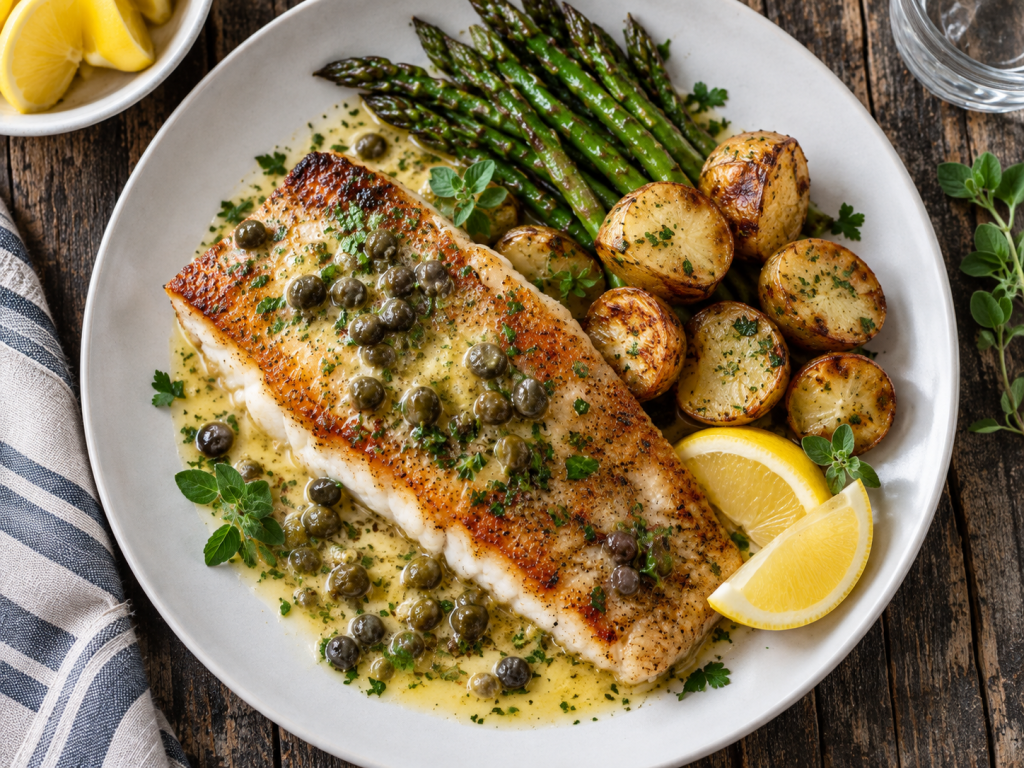
This pan-seared red snapper is built for the kind of dinner that feels special without turning the galley into a project. The fish gets a golden crust in one hot skillet, then that same pan becomes a bright lemon-caper butter sauce with garlic and fresh herbs.
Why It Works in the Galley
- One skillet, one burner: The fish and sauce are made in the same pan, so cleanup stays simple.
- Fast enough for a travel day: Once the fish is prepped, dinner is on the table in about 20 minutes.
- Provisioning-friendly: Capers, flour, oil, garlic, and dried or hardy fresh herbs are easy to keep aboard.
- Flexible fish choice: Red snapper is excellent here, but the technique also works with other firm white fish.
- Meal-planner friendly: Pair it with roasted potatoes, rice, couscous, green beans, asparagus, or a simple salad.
Choosing and Preparing the Snapper
Look for firm fillets with a clean, mild smell and moist—not watery—flesh. Skin-on or skinless fillets both work. If using frozen snapper, thaw it completely in the refrigerator and dry it especially well before it touches the skillet. Moisture is the enemy of a good sear.
Run your fingertips over the center of each fillet and remove any pin bones with clean tweezers. If the fillets vary greatly in thickness, expect the thinner one to finish first and remove it from the pan rather than overcooking it.
The Secret to a Golden Sear
- Dry the fish thoroughly. Use paper towels and press both sides dry.
- Use only a light flour coating. You are not breading the fish; the flour simply helps build a delicate golden surface.
- Preheat the skillet. Add the fish only after the oil and butter are hot and shimmering.
- Do not move it too early. When the crust has formed, the fillet releases much more easily from the pan.
- Use a thin fish spatula. It gives better support when turning a delicate fillet.

Building the Lemon-Caper Butter Sauce
The pan sauce is where the browned bits left behind by the fish become flavor instead of cleanup. After the snapper comes out, lower the heat and briefly soften the garlic. Lemon juice, a splash of water or dry white wine, and capers loosen the browned fond from the skillet. A final piece of cold butter gives the sauce body and gloss, while fresh herbs keep it bright.
Captain's Notes
- Skin-on fillets: Start skin-side down and hold the fillet flat with a spatula for the first 15–20 seconds if the skin wants to curl.
- No white wine aboard? Use water. The lemon, capers, browned pan bits, and butter provide plenty of flavor.
- No capers? Finely chopped green olives give a different but useful briny substitute.
- Gluten-free option: Use a 1-to-1 gluten-free flour, rice flour, or simply omit the flour. The crust will be slightly different, but the fish will still sear well if it is very dry.
- Herbs: Parsley, chives, oregano, thyme, or a combination all work. Use what you have.
- Doneness: The center should be opaque and flake easily. For a precise check, cook fish to 145°F in the thickest part.
What to Serve With It
For a full dinner, serve the snapper with roasted baby potatoes and asparagus, as shown here, or keep it even simpler with rice and a green vegetable. A crisp salad, couscous, cauliflower mash, or crusty bread also works well because each one gives you something to catch the lemon-caper butter sauce.
Provisioning and Storage
Capers are an especially useful galley ingredient because a small jar adds a lot of flavor and keeps well refrigerated after opening. Lemons usually hold well for days, while butter can be refrigerated or frozen. If your snapper is frozen, keep the fillets sealed until the day before cooking and thaw them in the refrigerator.
This dish is best eaten immediately after cooking. Leftovers can be refrigerated in a covered container for up to 2 days, but reheating should be gentle—low heat in a covered skillet with a spoonful of water or sauce works better than blasting the fish in a microwave.
- 2 fillets red snapper (5–6 ounces each; skin-on or skinless)
- 1/2 teaspoon kosher salt (plus more to taste)
- 1/4 teaspoon black pepper (freshly ground)
- 1 tablespoon flour (all-purpose; use rice flour or gluten-free flour if desired)
- 1 tablespoon olive oil
- 2 tablespoons butter (unsalted; divided)
- 1 clove garlic (finely minced)
- 1 lemon (zested, then juiced; about 2 tablespoons juice)
- 1 1/2 tablespoons capers (drained and rinsed)
- 2 tablespoons water (dry white wine may be substituted)
- 1 tablespoon parsley (fresh; finely chopped)
- 1 teaspoon oregano (fresh leaves; thyme or chives may be substituted)
- lemon wedges (for serving)
- 1 Dry and inspect the snapperPat the snapper fillets very dry on both sides with paper towels. Run your fingertips over the center of each fillet and remove any pin bones. If the fish was frozen, take extra time to remove surface moisture.A dry surface is the most important step for a clean golden sear.
- 2 Season and lightly flourSeason both sides of the fillets with kosher salt and black pepper. Dust with the flour, then shake or brush off the excess so only a very thin coating remains.You should still be able to see the fish through the flour.
- 3 Heat the skilletPlace a heavy 10- to 12-inch skillet over medium-high heat. Add the olive oil and 1 tablespoon of the butter. When the butter is melted and the fat is shimmering, reduce the heat to medium.The pan should be hot before the fish goes in, but the butter should not be smoking.
- 4 Sear the first sideLay the fillets in the skillet presentation-side down; if using skin-on fish, start skin-side down. Cook without moving for 3 to 4 minutes. Test gently with a thin fish spatula. When the fillet releases without tearing, it is ready to turn.If it sticks firmly, give it another 20–30 seconds and test again.
- 5 Flip and baste
 Carefully turn the fillets. Add 1/2 tablespoon of the remaining butter to the skillet. Tilt the pan slightly and spoon the foaming butter over the fish as it cooks for another 2 to 4 minutes, depending on thickness.Remove thinner fillets first if necessary. The fish is done when opaque and flaky or when the thickest part reaches 145°F.
- 6 Rest brieflyTransfer the snapper to warm plates and let it rest for about 2 minutes while you make the sauce. Leave the browned butter and flavorful bits in the skillet.Do not wipe out the pan.
- 7 Start the aromaticsLower the heat to medium-low. Add the minced garlic and cook for about 15 seconds, stirring constantly, just until fragrant.Do not let the garlic brown.
- 8 Deglaze the panAdd the lemon juice, lemon zest, capers, and water or dry white wine. Scrape the bottom of the skillet with a wooden spoon to loosen the browned bits. Simmer for 30 to 60 seconds.The sauce should reduce slightly but still be loose enough to spoon over the fish.
- 9 Finish with butter and herbsTurn off the heat. Swirl in the final 1/2 tablespoon butter until the sauce turns glossy. Stir in the parsley and oregano. Taste and adjust with a pinch of salt, extra pepper, or another squeeze of lemon if needed.Adding the final butter off heat keeps the sauce smooth.
- 10 Serve
 Spoon the hot lemon-caper butter sauce over the snapper and serve immediately with lemon wedges. Add roasted potatoes, asparagus, rice, couscous, or a green salad for a complete meal.Serve while the seared surface is still crisp.
Fish substitutions: Other snapper varieties, grouper, mahi-mahi, halibut, cod, or another firm white fish can be used. Adjust cooking time to thickness.
Skin-on fillets: Start skin-side down and press lightly with a spatula for the first 15–20 seconds to prevent curling.
Gluten-free: Use rice flour or a 1-to-1 gluten-free flour, or omit the flour entirely.
Capers: Rinse very salty capers before using. Chopped green olives are a useful substitute if capers are unavailable.
Galley tip: Measure and chop the sauce ingredients before the fish hits the pan. Once cooking begins, the recipe moves quickly.
Storage: Best served immediately. Refrigerate leftovers up to 2 days and reheat gently in a covered skillet over low heat.